
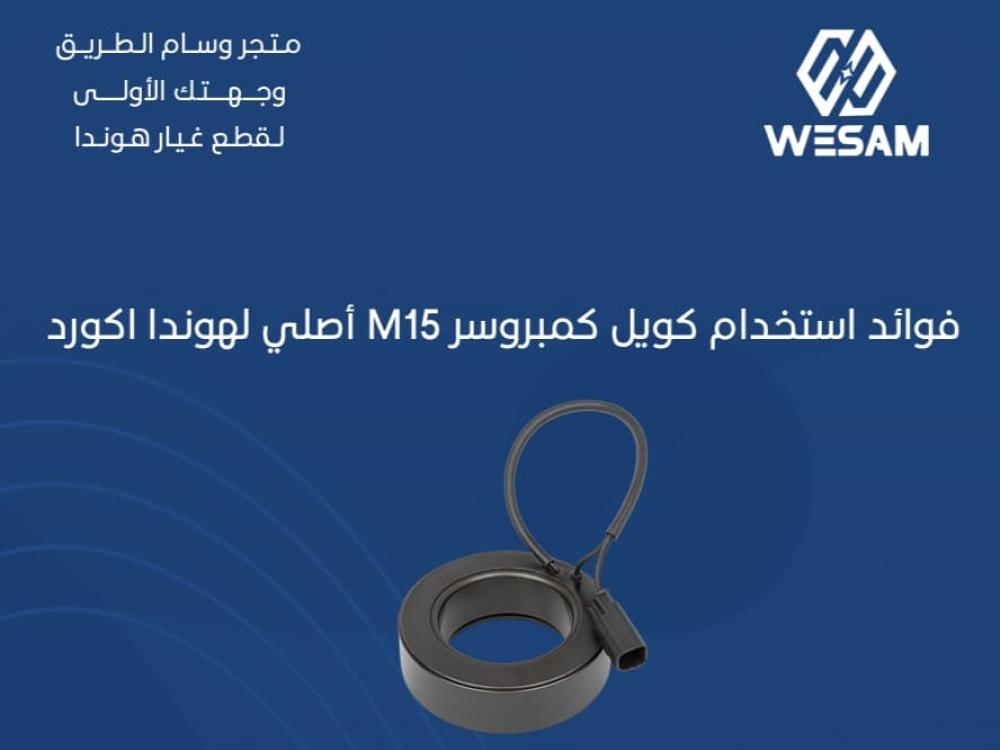
The ignition coil is one of the core components of the ignition system. Its role is to convert the battery’s low voltage into a high voltage that allows the spark plugs to generate the spark needed to ignite the air–fuel mixture inside the cylinders. This guide explains the role of the ignition coil in the Honda Accord, the symptoms that may indicate failure, practical inspection methods, and when replacement becomes necessary.
What Is an Ignition Coil and What Does It Do?
The ignition coil works as a small electrical transformer. It receives low-voltage current from the battery and boosts it to a high voltage sufficient to ignite the fuel mixture inside the cylinder. When the coil operates efficiently, the spark is stable and the engine runs smoothly. When it weakens, performance issues or increased fuel consumption may occur.
How Does the Ignition Coil Work?
The spark generation process occurs in two main stages:
- Primary Winding: Receives low voltage and controls the timing of current interruption.
- Secondary Winding: Converts the current into high voltage that is delivered directly to the spark plug.
Common Signs of Ignition Coil Failure
Symptoms may appear gradually or suddenly. The most common signs include:
- Engine misfires or noticeable shaking, especially during acceleration.
- Poor throttle response.
- Increased fuel consumption.
- Difficulty starting the engine or delayed startup.
- Illuminated Check Engine light.
- Noticeable vibrations while idling.
Common Causes of Ignition Coil Damage
- Excessive heat: Gradually degrades internal insulation.
- Worn or incompatible spark plugs: Increase the electrical load on the coil.
- Oil or water contamination: Can weaken the spark or cause electrical shorts.
- Loose or poor connections: Lead to unstable ignition signals.
- Lack of compatibility: Incorrect specifications may cause repeated faults.
Practical Methods to Test an Ignition Coil
1) Visual Inspection
- Check for cracks or burn marks on the coil housing.
- Inspect the connector for corrosion or moisture.
- Ensure the spark plug well is clean and dry.
2) OBD Diagnostic Scan
Reading fault codes can help identify whether a misfire is linked to a specific cylinder. However, this step should be supported by physical inspection.
3) Coil Swap Test
The suspected coil can be moved to another cylinder. If the misfire follows the coil, it is likely the source of the problem.
4) Spark Plug Inspection
The spark plug should be checked at the same time, as a faulty plug can either cause the issue or contribute to coil failure.
When Should an Ignition Coil Be Replaced?
There is no fixed service life, but replacement is recommended when:
- A misfire is confirmed to be related to the coil after testing.
- The same cylinder experiences repeated faults.
- Visible physical damage is present.
Should You Replace One Coil or the Entire Set?
If the issue is limited to a single coil and the remaining coils are in good condition, replacing only the faulty unit may be sufficient. However, if failures are frequent or the coils are aged, replacing the full set can be a practical solution to reduce recurring problems.
Common Mistakes to Avoid
- Replacing the coil without checking the spark plug and wiring.
- Leaving oil or moisture inside the spark plug well.
- Installing a coil that does not match vehicle specifications.
- Improper tightening that causes vibration or poor electrical contact.
Conclusion
The ignition coil plays a critical role in maintaining stable engine performance. Early diagnosis of misfire symptoms, proper testing procedures, and good care of spark plugs and electrical connections all help reduce failures and preserve engine efficiency over the long term.