
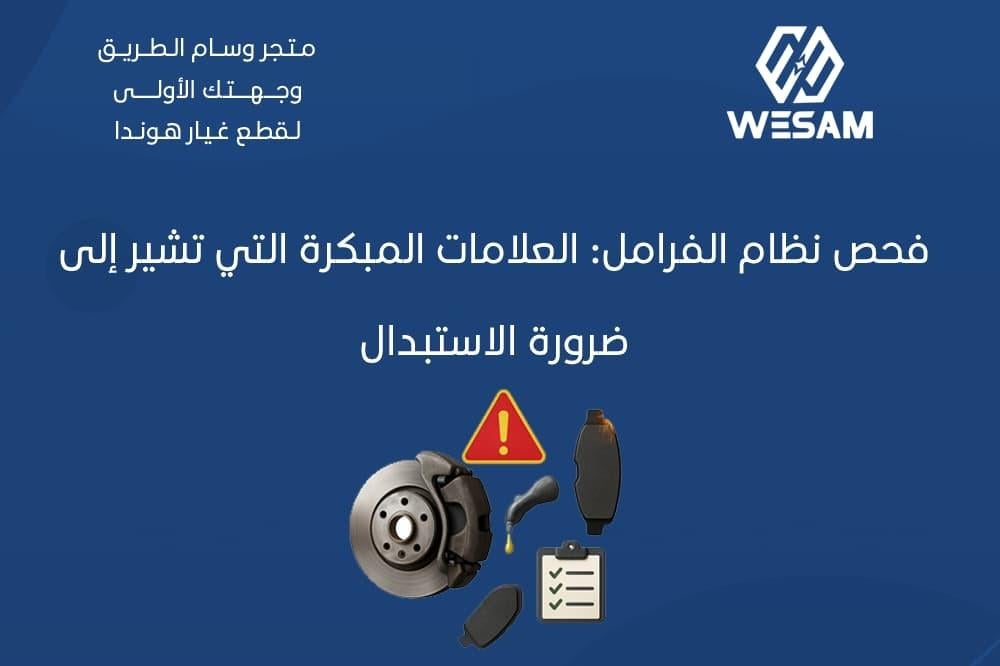
Brake system safety is one of the most critical aspects of your car's maintenance, as your safety depends on the ability to stop in time and avoid accidents. With frequent use and varying road conditions, brakes gradually wear out, and you might not notice until a serious problem arises.
Importance of Regular Brake System Inspection:
The brake system is your first line of defense and is highly important for safety when stopping the vehicle. It includes several key components: the Disc Rotor, Brake Pads, Brake Fluid, and hoses and pipes.
Neglecting their maintenance leads to decreased performance and increased stopping distances, which can cause serious accidents.
Impact of Wear on Stopping Distance:
When brake pads wear down to a low thickness, the friction between them and the disc decreases, extending the braking distance by a rate that may range from 10% to 30% depending on the level of wear.
Risks of Brake Fluid Leaks:
The role of brake fluid is to transfer pressure from the brake pedal to the pads. Any leak or contamination in the fluid reduces efficiency, makes use difficult, and leads to pedal sponginess before the brakes begin to react.
Read More: Tips for Engine Maintenance and Increasing Its Lifespan.
Early Signs Indicating the Need for Inspection or Replacement:
Several early symptoms can be spotted before a complete brake failure occurs. Monitoring these signs protects your safety and the safety of vehicles around you, as prioritizing safety is a key element of safe driving.
Squealing or Metallic Grinding Sound:
When brake pad thickness approaches the minimum limit, a metallic squealing sound appears when pressing the brakes. This sound is an early mechanical warning indicating the need to replace the pads.
Pedal or Steering Wheel Vibration:
Slight vibrations in the brake pedal or steering wheel during braking may be a sign of disc warping or rust buildup between the disc and the pad.
Dashboard Indicators:
Some cars are equipped with a sensitive brake thickness indicator on the dashboard; a brake symbol or "Check Brakes" light appears when the thickness reaches the warning limit.
Brake Fluid Color Change or Air Bubbles:
Clear brake fluid tends to be pale yellow. If you notice a dark brown color or air bubbles when checking the reservoir, this indicates fluid oxidation and moisture absorption.
How to Perform a Comprehensive Brake Inspection:
To ensure early detection of problems, follow these inspection steps with every routine service or every 10,000 km.
Brake Pad Inspection:
- Lifting the Car: Use a jack and secure stands to lift the side to be inspected.
- Removing the Wheel: Unscrew the wheel nuts and remove the wheel to expose the disc brakes.
- Reading the Thickness: Measure the pad thickness between the metal and the friction surfaces; it should not be less than 3 mm for immediate replacement.
Brake Disc Inspection:
- Feeling the Disc Surface: It should be smooth and flat.
- Measuring Disc Thickness: Use a micrometer to measure thickness. If it falls below the manufacturer's recommended thickness (often around 22–24 mm for the front), replace it.
- Searching for Cracks or Dents: Any responsive deformities hinder uniform friction.
Brake Fluid Inspection:
- Contamination Test: Use brake moisture test strips to determine the water percentage; if it exceeds 3%, the fluid must be changed.
Tools and Materials Needed for Inspection and Replacement:
Before starting the inspection or replacement process, ensure the following tools are available:
- Jack and Safety Stands: To lift the car stably.
- Wheel Nut Wrench: The appropriate size for your car's nuts.
- Micrometer and Flashlight: To measure pad and disc thickness.
- Hex or Torx Key: To open the caliper.
- New Brake Fluid and Cable Cleaner: For refilling and cleaning components.
- Safety Gloves and Goggles: To protect hands and eyes from debris and oils.
Tips for Maintaining Brake Performance:
Predictive Driving:
Avoid sudden braking as much as possible and anticipate stopping the car well in advance to reduce pressure on the brake system.
Regular Cleaning of Parts:
Use a specialized Brake Cleaner to remove metallic dust and friction residue that reduce braking efficiency.
Periodic Brake Fluid Replacement:
Replace the fluid every 2 years or every 40,000 km, even if no contamination symptoms appear. Fresh fluid ensures better pedal response.
Common Mistakes and How to Avoid Them:
Mixing Different Types of Pads:
It is preferable to use pads of the same type and brand when replacing to avoid variations in the friction coefficient.
Using Non-Compliant Brake Fluid:
Choosing fluid that does not meet ISO 4925 standards or mixing DOT 3 and DOT 4 types damages the rubber inside the hoses and leads to leaks.
Ignoring Warning Sounds:
When hearing a metallic squealing sound or feeling pedal vibration, do not delay the inspection, as it may develop into disc seizing and brake pump damage.
Finally: Inspecting the brake system and relying on the appropriate choice for your vehicle is safety for you and others. It is the most important part of the vehicle, and its maintenance protects you from accidents, God willing.
At Wesam Al-Tariq, we remind you: How to order via our online store. Don't forget to rely on Wesam Store for high-quality original brake parts for Honda cars, with guaranteed best prices and fast delivery service for a safe and reassuring journey.