
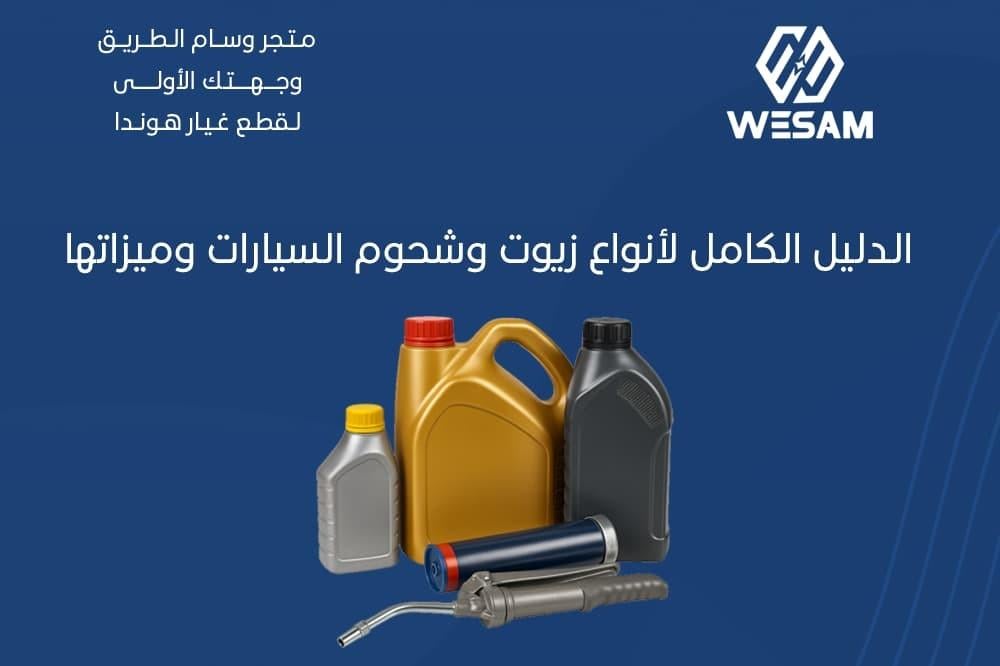
Lubrication using oils and greases is the cornerstone of maintaining the safety and efficiency of engines and industrial machinery. They reduce friction between moving parts, prevent premature wear and tear, and help cool components. They also play a vital role in heat transfer and preventing the buildup of oxidation and harmful deposits.
Basic Types of Oils:
Oils vary according to application, physical, and chemical properties. Here are the most prominent ones:
Engine Oils:
Engine oils are the most common and widely consumed, classified into three main types:
- Conventional Mineral Oil: Extracted from crude oil through a simple refining process. It provides good protection at moderate temperatures but degrades faster compared to other types.
- Semi-Synthetic Oil: A blend of mineral oils and synthetic compounds. It combines low cost with improved performance and lasts longer than mineral oils.
- Fully Synthetic Oil: Chemically manufactured to achieve stable viscosity across wide temperature ranges. It provides the best engine protection, especially at high temperatures and under heavy loads, but is the most expensive.
Engine oils keep components clean thanks to detergent additives that dissolve deposits. They also contain antioxidants that prevent oil degradation caused by heat. It is recommended to change the oil in conventional cars every 5,000–10,000 km, and in modern vehicles equipped with synthetic oils every 15,000–20,000 km, according to the manufacturer's recommendation.
Transmission Oils:
These oils are designed to work within manual or automatic transmission gears:
- Manual Transmission Oil: Characterized by higher viscosity to withstand pressure between metal gears and avoid clutch slippage.
- Automatic Transmission Fluid (ATF): Its formula is complex and contains additives to prevent wear, control friction levels within the transmission pan, and ensure smooth gear shifting.
Automatic transmission fluids withstand very high temperatures due to the constant friction of gears. They are usually changed every 60,000–100,000 km, but checking the oil level and color (it should be pink or light red) every 20,000 km is an important step for early detection of contamination.
Hydraulic Oils:
Used in brake systems, hydraulic wheels, and brakes:
- Brake Fluid: According to DOT specifications, such as DOT 3, DOT 4, and DOT 5.1, characterized by different moisture absorption properties to ensure constant pressure under high temperatures.
- Power Steering Fluid: Its formula prevents foam formation and ensures rapid response to the steering pedal.
Brake fluids require replacement every two years to avoid moisture buildup, which reduces the oil's boiling point and leads to brake failure. As for power steering fluids, they are checked and replaced every 40,000–60,000 km or according to the manufacturer's recommendation.
Types of Greases and Their Properties:
Greases differ from oils in that they are a mixture of a base material with an additive agent, characterized by staying at the application site and not leaking quickly. They are divided into:
Lithium Grease:
- Base: Lithium 12-hydroxystearate soap.
- Properties: High viscosity, good resistance to water and oxidation, used in wheel bearings and joints.
Lithium grease adapts to temperatures from –20°C to +150°C and resists high shear forces within bearings. It is the most common choice in cars for its durability and versatility.
Calcium Grease:
Calcium grease's water resistance makes it ideal in wet areas or near salt water, such as external bearings and door joints. However, it is less resistant to high temperatures compared to lithium.
Synthetic Grease:
- Base: Polyalphaolefins (PAO) or Polyethylene Glycol (PEG).
- Properties: Excellent viscosity stability, high heat resistance (up to +200°C), long-lasting.
Despite its high price, it provides ideal protection in heavy industrial applications and high-performance engines. It is used in suspension joints and high-speed transmissions.
Technical Standards for Choosing the Right Oil or Grease for Your Car:
When choosing the right oil or grease, consider:
- Viscosity Grade: According to SAE standards, such as 5W-30 and 10W-40 for engine oils.
- OEM Specs: Such as API, ACEA, and ILSAC, to ensure additive compatibility and oxidation resistance.
- Operating Conditions: Temperatures, loads, and environment (humidity, dust, water).
- Required Change Interval: Maintenance cost and the period between each change.
Tips for Storage and Change Intervals:
- Proper Storage: Keep containers in a cool, dry place away from direct sunlight, at a temperature of 5–35°C.
- Sealing Containers: Close the lid tightly after each use to prevent moisture absorption or oil contamination with dust.
- Production and Expiry Date: Check the code and container quality; do not use oil after its expiry date (usually two years from production).
- Maintenance Record: Note the date and odometer reading at each oil or grease change to facilitate tracking the schedule.
How to Maintain Long-term Performance:
- Periodic Inspection: Monitor oil level and viscosity using a viscometer or by consulting a technician.
- Replacing Oil and Hydraulic Filters: Ensures the oil remains clean and free of impurities.
- Using Additives When Needed: Such as friction modifiers or anti-wear additives in harsh operating conditions.
- Training and Awareness: Give technicians accurate information about the type of oil or grease used to ensure correct installation and a system free of contaminants.
The importance of choosing the right oil or grease lies in maintaining the efficiency of engines and machinery, thus ensuring the vehicle operates well, which results in reduced maintenance costs and a longer life for mechanical parts.
A tip for you: make sure to buy oils and greases from Wesam Store, where they reach your doorstep. It is specialized in Honda spare parts, where you will find a wide range of original and high-quality products with fast delivery service within the Kingdom of Saudi Arabia.